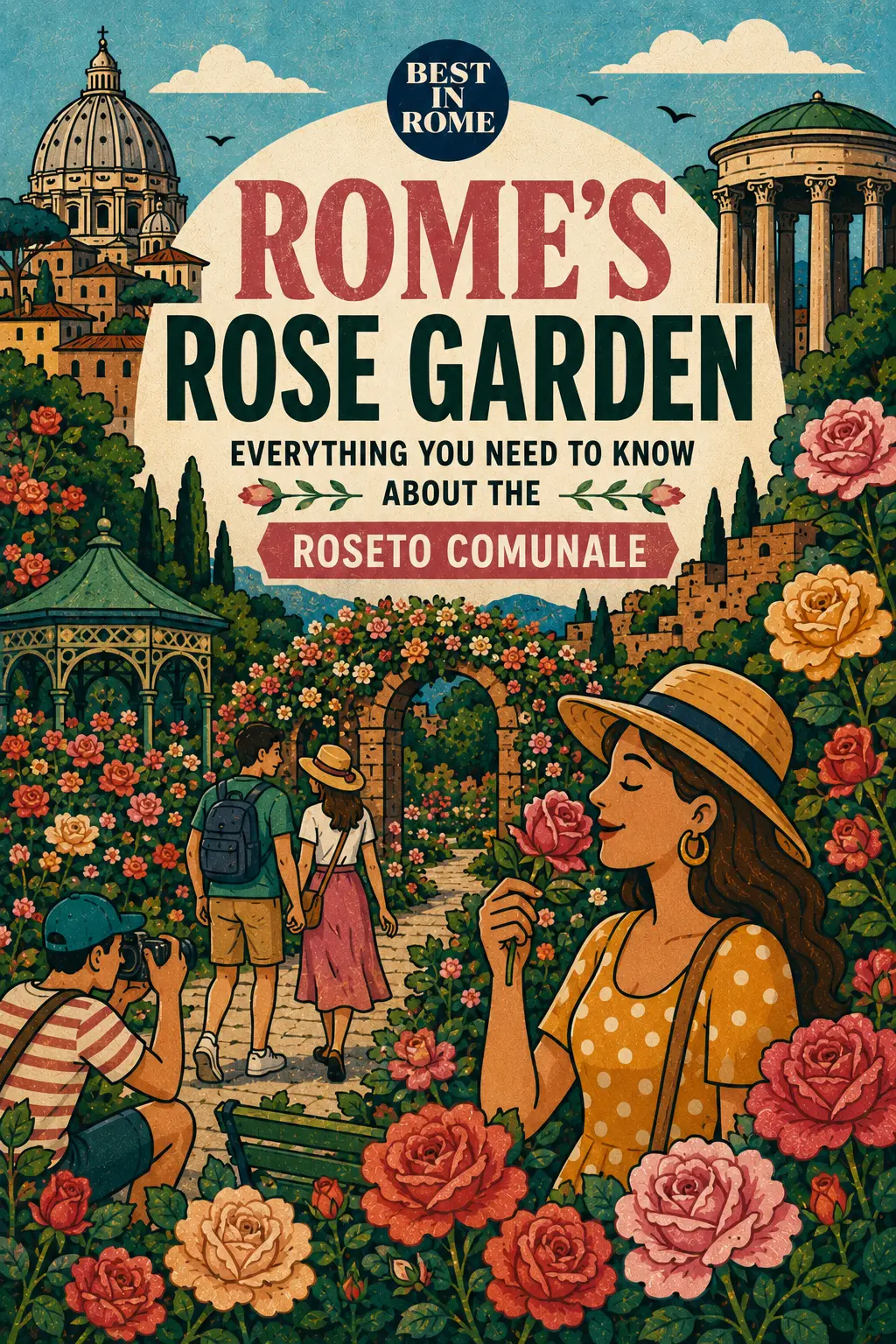

There is a garden on the Aventine Hill, just above the Circus Maximus, that opens for a few weeks each spring and then closes again until October. Most tourists walk straight past it. Romans know about it and keep going back.
The Roseto Comunale is Rome’s municipal rose garden, and it is one of the most genuinely beautiful places in the city. It is free, it is open every day, and it has a panoramic view over the Palatine Hill and the ancient ruins below that would justify a visit even without the roses. With over 1,100 varieties of roses from around the world in full bloom, it is something else entirely.
It is open until Sunday 14 June 2026. If you are in Rome before then, go.
What the Roseto Comunale Is
The garden sits on the slopes of the Aventine Hill in an area that has been associated with the goddess Flora since antiquity. The modern rose garden was established in the early 20th century thanks to the Countess Mary Senni, who wanted Rome to have a dedicated space for roses and their study.
The site has a deeper history than most visitors realise. From 1654 to 1934, this hillside was the Jewish cemetery of Rome. When the municipality moved the rose garden here from the Colle Oppio in 1950, the layout of the paths was kept in the shape of a Menorah, the seven-branched Jewish candelabrum. If you look at the garden from above or trace the paths as you walk, the shape is there. The stone tablet of the Ten Commandments at the entrance marks the connection explicitly. It is one of those details that changes how you see a place once you know it.
The current garden covers about 10,000 square metres and is shaped like a natural amphitheatre, terraced down the hillside toward the Circus Maximus.
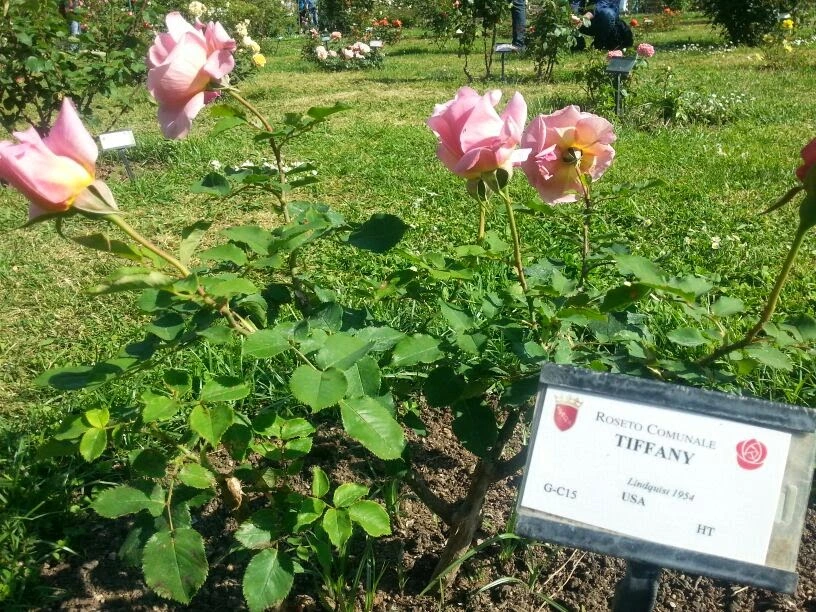
The collection is divided into two areas. The upper part holds the main collection: over 1,100 varieties of roses, both botanical and hybrid, ancient and modern, from the Far East, South Africa, New Zealand, the Americas and Europe. Some of the botanical species in this collection date back millions of years. Others are modern cultivars developed specifically for color, scent or disease resistance. Walking through this section is genuinely educational even if you know nothing about roses, because the variety of shapes, colors and scents is extraordinary.
The lower part is the competition area, home to the roses that have participated in the Premio Roma, the international rose competition that has been running for nearly a century. This section is open from 18 May to 14 June. The award ceremony for new varieties took place on 17 May, and the winning roses from this year and previous editions are now on display. It is worth seeing: these are the roses considered most significant by an international jury of botanists and horticulturalists.
The View
The garden faces northeast, which means the view from the upper terraces looks directly across to the Palatine Hill, the Roman Forum in the distance, the campanile of Santa Maria in Cosmedin, the dome of the Synagogue, and the Vittoriano on the horizon. On clear days you can see as far as Monte Mario.
This view would make the Roseto worth visiting even if it were empty. The combination of ancient ruins, the city’s rooftops, and the hillside covered in roses is difficult to describe without sounding excessive, so I will just say that it works and leave it at that.
I have been here in the morning when the light is clean and the garden is nearly empty, and at sunset when the last hour before closing turns everything gold and the roses seem to hold the color longer than anything else around them. Both are worth it. If you can only go once, go in the late afternoon and stay until closing.
The Premio Roma and the Competition Roses
The Premio Roma is one of the oldest international rose competitions in the world. Each year, rose breeders from different countries submit new varieties to be judged on originality, fragrance, form and resistance to disease. The winning and commended roses are then planted in the lower section of the garden.
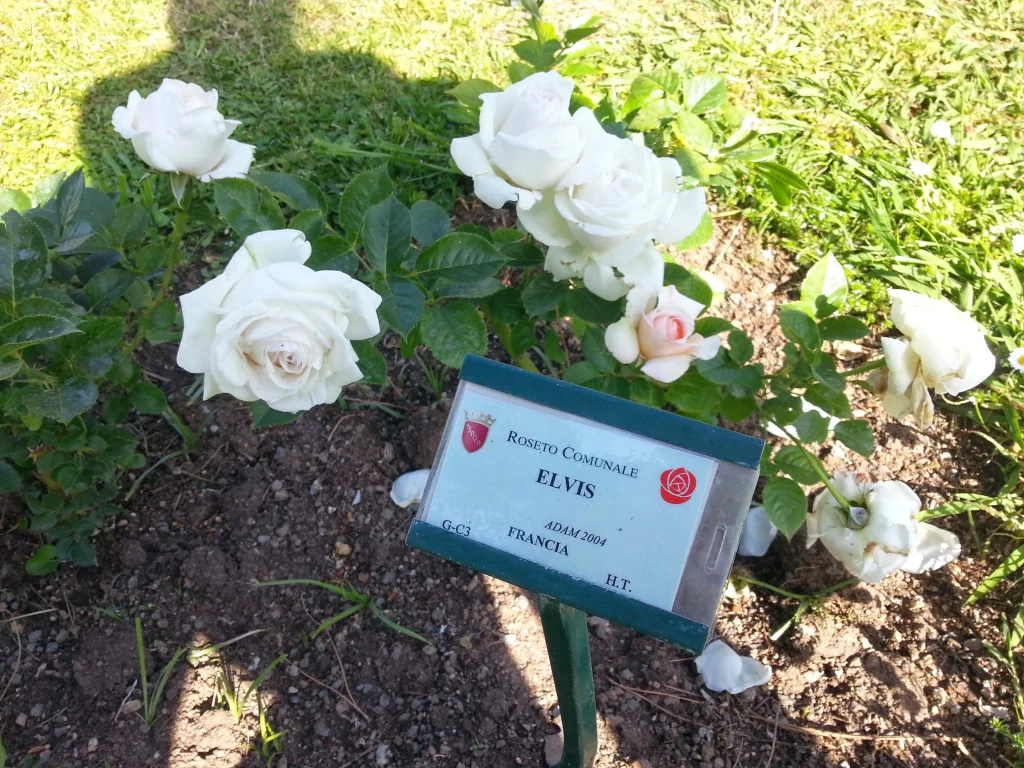
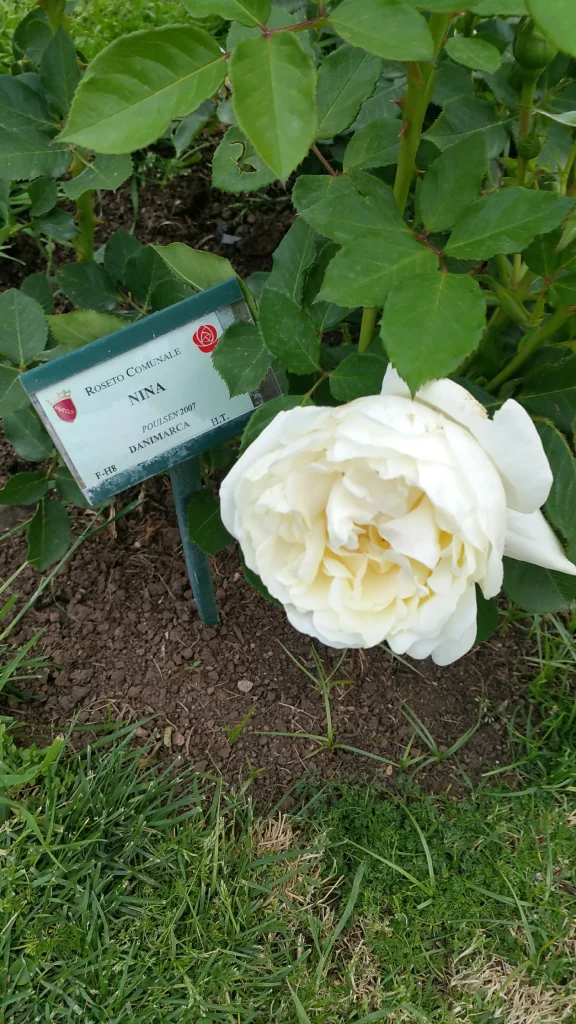
Walking through the competition area, you are looking at roses that did not exist ten years ago. Some of them bear names, some are still identified only by their breeder’s code. Each label shows the country of origin, the year the variety was created, and the name it was given, and it is oddly absorbing to read them as you walk.
The competition section is open from 18 May through 14 June, which means it is fully available for the remaining weeks of this year’s opening. If you visit now, you can see both the historic collection and the competition roses.
Practical Information
Address: Via di Valle Murcia 6, 00153 Roma. Both entrances are currently open: Via di Valle Murcia 6 (main entrance, recently restored with new cobblestones) and Clivo dei Pubblicii 3 (accessible entrance for visitors with reduced mobility).
Open: daily from 8:30 to 19:30, including weekends and public holidays, until Sunday 14 June 2026.
Admission: free, no booking required. Access is subject to capacity limits, so weekend mornings in May can have a short wait at the entrance.
Guided tours: available by reservation only. Email rosetoromacapitale@comune.roma.it or call 06 5746810 (Monday to Friday, 9am to noon).
Getting there: Metro B to Circo Massimo, then a few minutes on foot uphill. The garden is visible from the metro exit. Buses 51, 75, 118 and 160 also stop nearby.
Autumn reopening: the garden reopens for about two weeks in October or November for the autumn flowering of the Chinese, tea and modern roses. Dates are announced closer to the time on the Roma Capitale website.
A Few Things Worth Knowing
On crowds: the garden is busiest on weekend mornings in May, when the roses are at their peak. Weekday visits, particularly in the morning or late afternoon, are much quieter. The garden is large enough that even on a busy day it never feels overwhelming, but if you want a contemplative experience, go on a Tuesday or Wednesday morning.
On the best time to visit: the roses peak in mid-May. By early June some varieties are past their best, but the garden is still beautiful and the competition section is fully open. If you have a choice, aim for the second or third week of May.
On combining with other places: the Roseto sits naturally with the Giardino degli Aranci and the Knights of Malta keyhole, both a short walk away on the Aventine. The Circus Maximus is directly below. The Testaccio neighborhood with its market and food scene is ten minutes on foot. It makes for a very good half-day.
On the romantic angle: the garden at sunset, with the Palatine Hill turning amber and the roses holding the last light, is one of the more quietly spectacular things Rome offers in spring. It is free, it is never crowded at that hour, and it is the kind of thing that stays with you.
All practical information verified from the official Roma Capitale website in May 2026. Opening hours and access points can change, always check comune.roma.it before your visit.

Leave a Reply