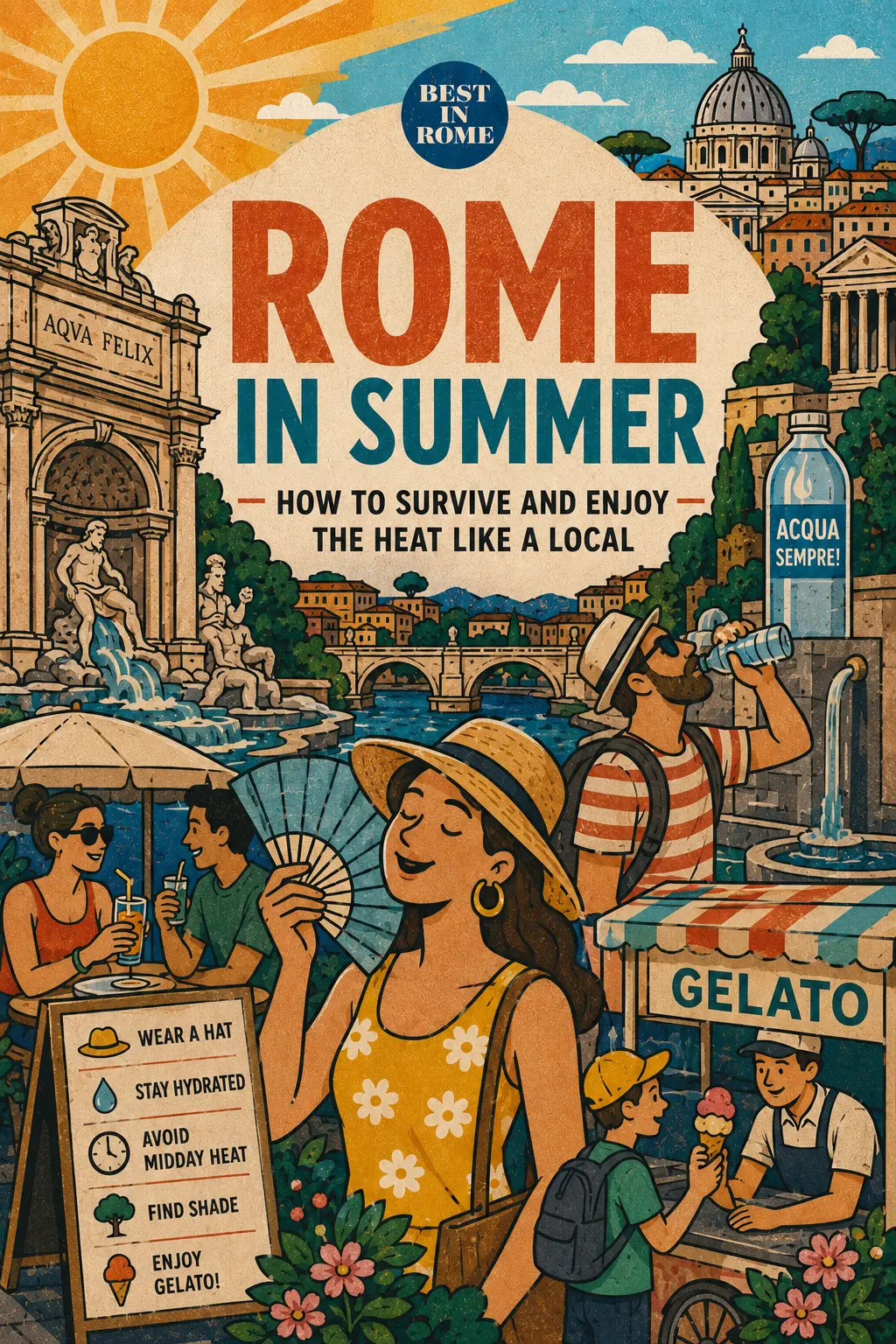

July and August in Rome are genuinely difficult if you approach them the wrong way. The temperature regularly hits 35°C and occasionally pushes toward 40°C. The historic centre fills up to a density that makes moving between monuments feel like a logistical operation. The cobblestones radiate heat from below while the sun comes from above. Everything smells slightly of sunscreen.
And yet, Romans who leave for August are always a little sad about it. The city in summer has a quality that it does not have at other times of the year. The evenings are warm and long, there is always somewhere to sit outside, the pace drops in a way that the rest of the year does not allow, and the light at sunset on the Forum or the Tiber is something that photographers spend years chasing.
This guide covers the practical side, how to handle the heat, when to do things, where to find water and shade, and the better side: what summer in Rome actually looks and feels like when you live here.
The Temperature: What to Realistically Expect
June is warm and manageable, usually between 25°C and 32°C, with occasional cooler days and some rain. It is the best summer month to visit Rome if you have a choice.
July is when the heat becomes serious. Average highs of 32°C to 35°C, with frequent periods above that. Humidity is lower than in northern European cities, which helps, but the stone and asphalt of the historic centre absorb and radiate heat in a way that makes the actual perceived temperature significantly higher than the official one. The hour between 1pm and 3pm is the hour Romans avoid the outdoors entirely, and there is wisdom in this.
August is the peak of both heat and tourist numbers, combined with the fact that many Roman businesses, restaurants and bars close for some or all of the month as their owners go on holiday. The city empties of its residents and fills with visitors. It is an unusual and slightly surreal atmosphere that some people love and others find disorienting.
The heat breaks in September, which along with October is the best month to visit Rome for weather, crowds and atmosphere together.
The Nasoni: Rome’s Free Water Network
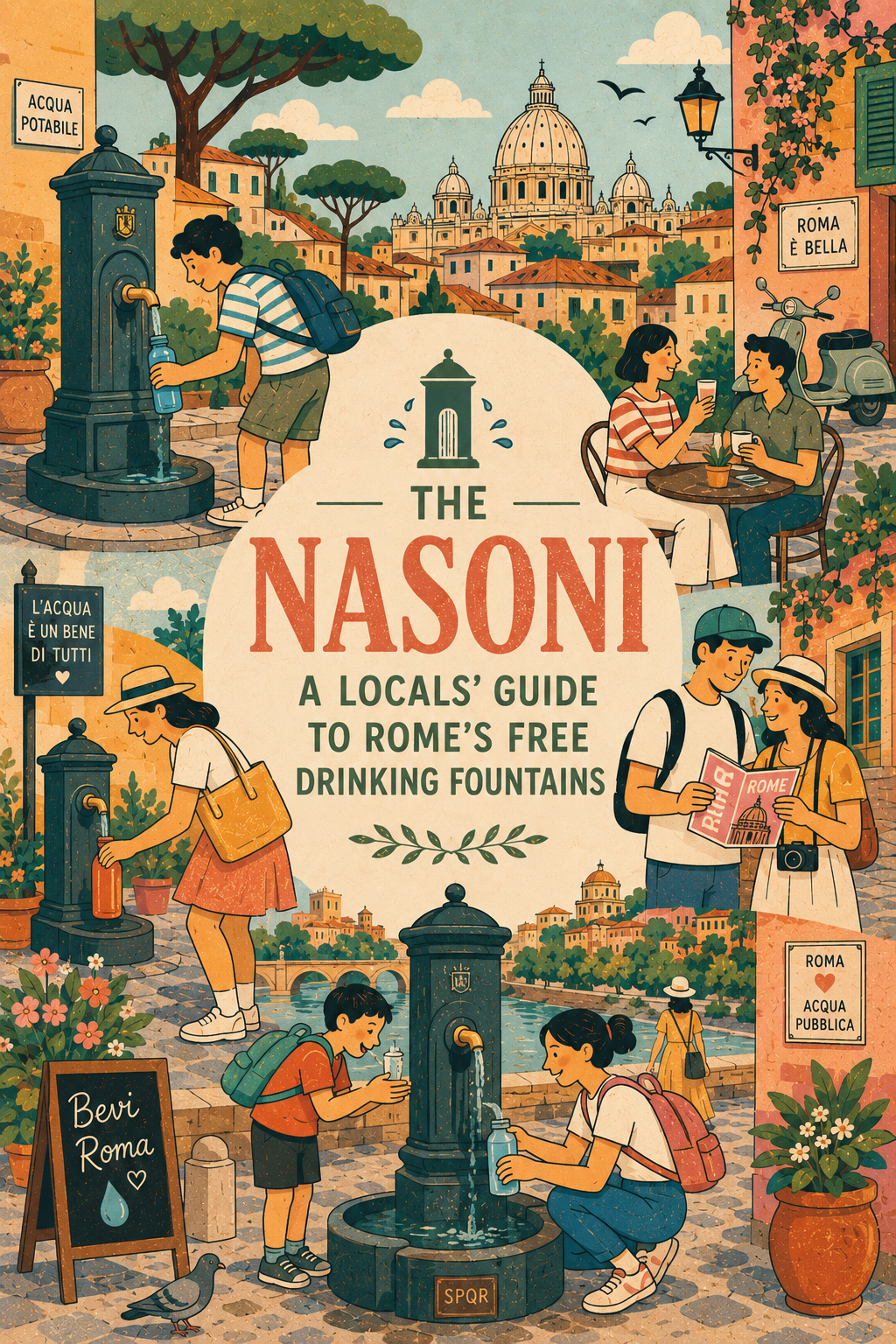
The single most useful thing to know about surviving summer in Rome is the nasoni. These are the small cast-iron drinking fountains installed on streets and piazze across the entire city, over 2,500 of them in total, more than any other city in the world. The water comes from the Apennine springs via the same aqueduct system that has been supplying Rome since antiquity, and it is cold, clean and free.
The nasoni run continuously and always have. The water is tested and managed by ACEA, the city’s water utility, and is perfectly safe to drink. Romans fill water bottles from them, splash their faces, wet their hats. Tourists who are used to paying €3 for a bottle of water walk past them without noticing.
The trick to drinking from a nasone: the tap has a small hole on the top. If you put your finger over the main outlet, the water jets upward from the hole so you can drink directly without bending down to the level of the tap. Every Roman child learns this at age four.
Bring a reusable bottle. You will never be more than a few minutes from a nasone anywhere in the centre, and refilling it costs nothing.
How Romans Handle the Heat
The Roman approach to summer heat has been refined over centuries and it works.
Start early. The best time to visit any outdoor monument or market is before 9:30am. The light is beautiful, the crowds are thin, the temperature is bearable. By 11am the situation is already different. By 1pm, only tourists are outside.
Stop between 1pm and 4pm. This is not laziness, it is physiology. Find a restaurant with air conditioning, a cool church, a café, or a shaded spot in a park and do not attempt to walk the Colosseum at 2pm in July. The monuments will still be there at 5pm when the temperature begins to drop.
Go out again after 6pm. The Roman evening is built around this logic. Aperitivo from 6:30, dinner at 9, walking until midnight or later. The city after dark in summer is genuinely beautiful and far more comfortable than at any point during the day.
Dress appropriately. Linen and cotton, loose fitting, light colours. Avoid synthetic fabrics. A hat is not a tourist accessory in a Roman summer, it is a practical necessity. Comfortable shoes for cobblestones are non-negotiable regardless of the season.
Churches are free air conditioning. This sounds irreverent but every Roman knows it. The major basilicas and churches of Rome are cool, dim and free to enter. Santa Maria Maggiore, San Giovanni in Laterano, Santa Maria sopra Minerva, the Pantheon itself: all of them maintain a temperature that feels extraordinary after the street outside. Sitting in a pew for fifteen minutes in the middle of a hot afternoon is not a religious experience unless you want it to be. It is also a very effective way to recover.
The Beaches: Where Romans Actually Go
Rome is not a beach city but it is 25 kilometres from the sea, and in summer Romans use that proximity constantly. The beaches of the Lazio coast are the daily escape from the heat, and understanding them makes a trip to Rome in summer considerably more enjoyable.
Ostia is the closest and most convenient. The Metromare (formerly Roma-Lido) connects from Piramide (Metro B) or Porta San Paolo and reaches Lido Centro in about 37 minutes. The fare is included in the standard ATAC ticket. One practical note for 2026: on weekdays the train service currently ends at 9pm due to ongoing track works, with replacement buses running until 11:30pm. On Saturdays and public holidays the train runs normally until 11:30pm. Once there you have a choice between free public beach and paid stabilimenti with sunbeds and umbrellas. It is busy, it is not particularly beautiful, but it is the sea and it is less than 40 minutes from the centre. Good for a morning or afternoon escape, particularly on a weekday.
A tip that most tourists miss: from Lido di Ostia you can take a local bus to Ostia Antica, one of the best-preserved ancient Roman port cities in existence. Combining a morning at the ruins with an afternoon at the beach is an excellent use of a summer day.
Fregene is the beach Romans go to when they want a proper day out. It is 40 kilometres north-west of the city, known for its pineta (pine forest that comes down to the sand), its beach clubs and its aperitivo culture. The train from Termini runs to Maccarese-Fregene, then a bus or taxi completes the journey. In summer it gets crowded on weekends, and Sunday evening traffic back into Rome is slow. Go on a weekday or leave before 5pm.
Anzio is further south, about an hour by regional train from Termini, and rewards the longer journey with cleaner water and a genuine town with a port, good fish restaurants and a slightly less frantic atmosphere. Also worth knowing: Anzio is the site of the Allied landings of 1944, and the war cemetery and museum are worth a visit if you are spending the day.
What Closes in August
August in Rome requires some planning. Many restaurants and bars, particularly family-run ones, close for two to four weeks during the month, usually displaying a handwritten “Chiuso per ferie” sign on the door. This is most pronounced in the two weeks around Ferragosto, the national holiday on 15 August.
The tourist-facing infrastructure, the major monuments, the big restaurants and most shops, stays open throughout. What closes is the layer of authentic Roman daily life underneath: the neighbourhood trattoria, the local alimentari, the parrucchiere on the corner. If you are looking for a specific restaurant, check before you go in August.
The upside of Ferragosto: the city is quiet in a way it is not at any other time. If you are there on the 14th or 15th of August, walk through Trastevere or the Prati neighbourhood in the early morning. The emptiness is striking and a little moving. Romans have a complicated relationship with August, which is precisely why most of them leave.
Summer Events: Estate Romana
The Estate Romana programme runs from June through September and covers outdoor cinema, concerts, festivals, food markets and cultural events across the city. Venues include the Isola Tiberina (Isola del Cinema festival, one of the best outdoor film screenings in Europe), the Terme di Caracalla (opera and ballet under the stars), and various parks and archaeological sites across the city.
Check the Estate Romana programme on the Roma Capitale website for the current calendar. Many events are free or low cost.
The Terme di Caracalla summer season deserves a specific mention. The ancient baths, which are among the largest and best-preserved Roman monuments in existence, host the Opera di Roma’s outdoor season from June through August. Watching Verdi or Puccini performed against the backdrop of 3rd-century Roman walls at night is one of the more extraordinary things available to a visitor in Rome. Tickets sell out, book in advance at operaroma.it.
A Few More Practical Notes
Sunscreen and a hat are not optional in a Roman summer. The UV index in July regularly reaches 8 or 9 out of 11. The stone of the historic centre reflects light in addition to radiating heat. Apply before you go out, not when you arrive at the monument.
Water at restaurants. In Italy you pay for bottled water at restaurants, usually €2 to €3. You are not obliged to order it. If a restaurant serves tap water (acqua di rubinetto) when asked, it is perfectly fine to drink. Some will, some will not. The alternative is the nasone outside.
Air conditioning on public transport. Metro lines A and B are air conditioned. Buses are less consistent but most modern ones have cooling. The tram network is older and can be very hot. Factor this into your transport choices on the worst days.
The Tiber in the evening. The lungotevere, the roads running along the Tiber, are where a lot of summer life in Rome happens after dark. Bars, food stalls, pop-up venues appear along the river from June through September as part of the Estate Romana. Walking along the river after 9pm, with the bridges lit up and the city cooled down, is one of the pleasures of a Roman summer that most visitors do not find.
All practical information verified in May 2026. Summer programmes and venue details can change, always check directly before visiting.
Leave a Reply